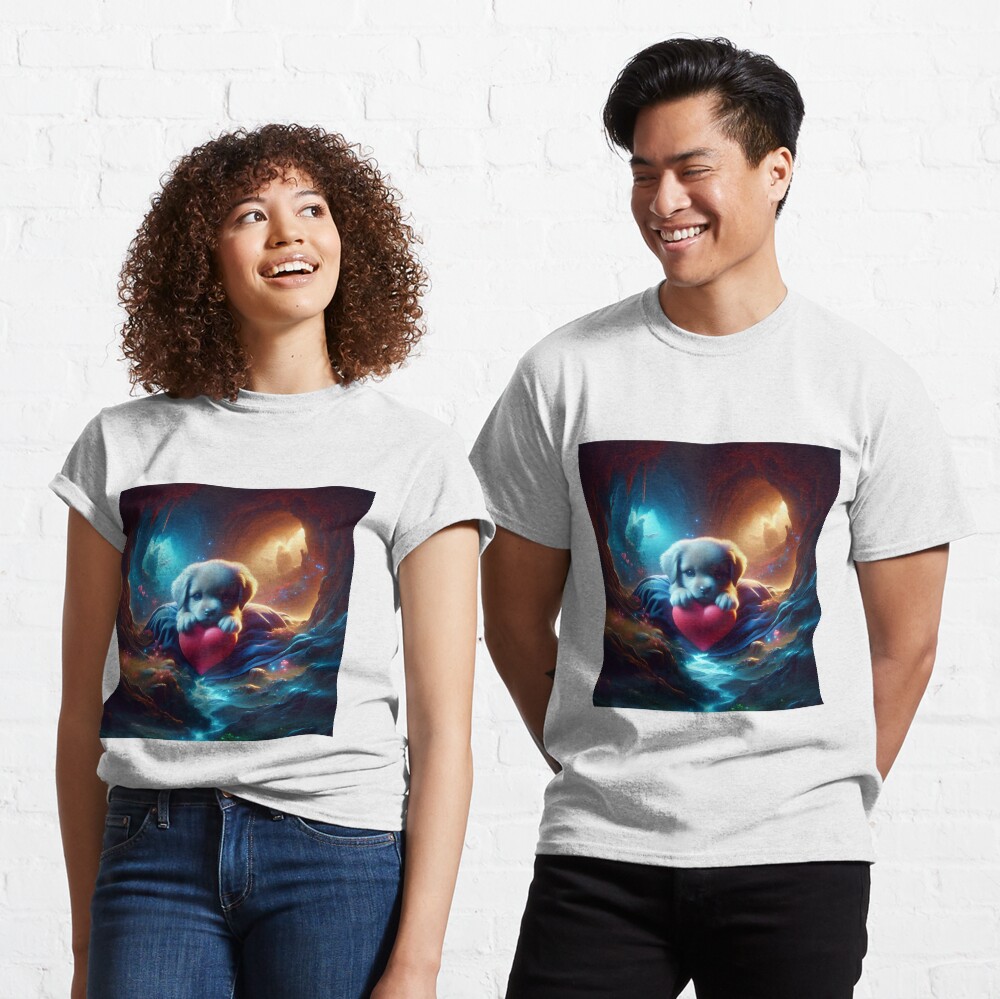
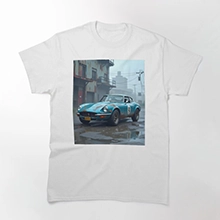
You can spot an AI-made graphic tee from three feet away – and not in a good way.
It’s usually the same tells: a wolf with too many teeth, a cyber-samurai packed with random symbols, a “vintage” badge that’s almost readable, almost centered, almost cool. The problem isn’t that it’s AI. The problem is that it looks like nobody cared enough to finish the thought.
That’s what makes AI-generated art t-shirt designs such a weirdly high-stakes corner of online shopping. The best ones feel like wearable storytelling. The worst ones look like a demo image that escaped into the wild and got slapped onto a black tee at 100% opacity.
This is a practical shopper’s lens on what to actually buy, how to judge quality fast, and how to pick AI-influenced designs that feel intentional – whether your vibe is clockwork romance, skull-and-floral drama, retro vehicles, or cute chaos.
The real question: does the design have a point of view?
AI can create imagery. It can’t automatically create taste.
A strong T-shirt graphic has a point of view: a mood, a motif, a little narrative thread. Maybe it’s “mechanical butterfly with stained-glass wings.” Maybe it’s “monster truck Valentine with a goofy heart.” Maybe it’s “steampunk skull crowned in roses like a love letter written in brass.” You feel the intent.
A weak design is just “subject + style prompt.” It might be technically detailed, but it’s emotionally flat. Your eye slides off it. If you’re buying tees for self-expression, that’s the line that matters.
So when you’re browsing, don’t ask “Is this AI?” Ask “Is this a design I’d choose even if I never knew how it was made?”
What makes AI-generated art actually work on a T-shirt
A T-shirt is not a poster. It moves. It wrinkles. It gets seen in pieces. Great AI-generated art t-shirt designs, respect that.
Readability at real-life distance
If the design only looks good when you zoom in, it’s not doing its job. The strongest graphics have a clear silhouette and an obvious focal point: the skull, the rose, the engine block, the eyes of the creature, the central emblem.
AI imagery often defaults to ultra-busy micro-detail. That can be impressive on-screen, but it turns into visual noise on fabric. The fix is editing and composition: simplifying shapes, cleaning edges, and deciding what the viewer should notice first.
Intentional color choices (not “every color at once”)
Printful-looking rainbow gradients and neon highlights can be fun, but they’re not automatically flattering on a shirt. A wearable palette tends to be limited and purposeful.
If you love steampunk aesthetics, think bronzes, teals, antique gold, and smoky blacks. If you’re drawn to skull/floral mashups, high-contrast creams and deep reds can hit hard. If you want vintage vehicle nostalgia, faded tones, and slightly distressed color can sell the era.
AI can generate the palette, but a human hand usually decides whether it feels like an outfit or a screensaver.
Negative space and shirt color compatibility
One of the quickest quality checks: does the design breathe?
A graphic that’s pasted edge-to-edge with no negative space tends to look like a sticker. A design that uses the shirt color as part of the composition feels integrated – as it belongs there.
Also, be wary of designs that only “work” on one shirt color because the midtones disappear on anything else. If the artist offers multiple colorways, that’s usually a sign the design has been thought through.
Clean typography (when there are words)
AI still struggles with text. That’s not a moral judgment – it’s just a shopping hazard.
If a tee includes words, zoom in. Look for:
- misspellings or near-letters (the classic “almost English”)
- inconsistent kerning and warped baselines
- random extra strokes that make letters look melted
Typography is where you can instantly tell whether someone cared enough to refine the output. Clean type is a credibility signal.
The “tell” signs of lazy AI tees (and how to dodge them)
Some problems are so common you can scan for them in seconds.
First: the “too perfect, too generic” subject. The symmetrical lion head with glowing eyes. The hyper-detailed astronaut with galaxy fog. The fantasy girl with a thousand strands of hair and no personality. These aren’t automatically bad, but they’re often copy-paste vibes across dozens of storefronts.
Second: detail that collapses into mush. When you zoom out, and the design turns into a gray-brown tangle, it won’t read on fabric.
Third: the anatomy weirdness that your brain catches but can’t name. Extra fingers, impossible joints, teeth that don’t sit in a jaw. On a T-shirt, those uncanny details get stared at.
Fourth: the “I used the default composition” problem. Subject dead-center, no framing, no shape language, no graphic structure. It looks like an image, not a design.
If you want AI-driven art that still feels like an artist made it, look for evidence of choices: cropping, layout, a controlled palette, and a clear focal point.
Style lanes where AI shines (when guided well)
AI can be a killer tool in certain aesthetics, especially when the goal is surreal, symbolic, or ornate.
Steampunk and clockwork fantasy
This is practically AI’s playground: gears, brass filigree, mechanical animals, Victorian shapes. Where it gets elevated is when the design has story logic. A “clockwork heart” is fine. A clockwork heart fused with roses and rivets like romance re-engineered? That’s a concept.
The best steampunk tees also keep the metal textures believable and avoid making every surface equally shiny. Variation in texture is what makes it feel like crafted machinery instead of plastic.
Skull and floral mashups
This theme works because it’s already about contrast: life and decay, beauty and bite.
AI can generate endless skull variants, but the good ones pick a mood. Is it gothic and ceremonial? Is it desert-bones and wildflowers? Is it crystal-and-ink, like a tattoo flash from another universe?
If the flowers look like generic filler, the design feels cheap. If the florals have structure and the skull has a readable shape, it feels like a statement piece.
Retro vehicles and nostalgia graphics
AI can nail the vibe of old signage, worn paint, and cinematic lighting. But the “vintage” look is easy to overdo. Heavy fake distressing can look like a filter.
Better: a design that suggests age through color choice and composition, not just scratches. And if there’s a badge or numbers, make sure they’re actually legible.
Cute chaos (yes, even that)
Not every graphic tee needs to be dark and dramatic. AI is great at playful mashups: dinosaurs with heart balloons, monster trucks with Valentine energy, animals in silly costumes.
The trick is to keep it simple enough that the joke lands instantly. If the cute idea needs 10 seconds of decoding, it’s not cute anymore.
Buying on marketplaces: what to check before you click
Most shoppers don’t want an art ethics seminar. They want to know: Will this show up, will it look like the listing, and will it feel worth the price?
Start with the product listing photos. Look for mockups that show scale on a body, not just a floating graphic. If the design is huge and fills the entire torso, that’s a choice – just make sure it’s your choice.
Then check whether the artist offers the design across multiple products (tees, hoodies, stickers) and whether it still reads. A design that works in more than one format usually has stronger fundamentals.
Pay attention to print placement and background transparency. Some graphics are designed as full rectangles, which can look like a pasted poster. Others have clean cutouts that blend into the shirt.
Finally, shop from creators who feel consistent. A storefront that jumps from 500 unrelated styles can be a sign of mass output. A curated body of work – even if it spans a few themes – tends to feel more intentional.
If you like shopping with a guide instead of wading through endless search results, that’s the whole point of a curated hub like Shopwithtshirts.com – it frames designs as aesthetics and stories, not just thumbnails.
The trade-offs: originality, repetition, and the “algorithm look.”
It depends on what you mean by “original.”
AI can generate images that have never existed before, but it also tends to produce patterns that feel familiar: the same lighting, the same hyper-detail, the same centered composition. That’s the “algorithm look,” and it can make different designs feel weirdly related.
If you want something that feels personal, look for signs of a human editor: consistent motifs, recurring characters, or a recognizable design voice. Repetition can actually be good when it’s thematic – like a series of mechanical animals, or a run of romance-meets-machinery hearts – because it feels like a collection, not a content dump.
On the flip side, a totally hand-drawn look isn’t automatically better if the design fundamentals are weak. Wearability beats ideology every time. The best tee is the one you reach for.
A simple way to choose the right design for you
Think of your T-shirt graphic like a character you’re introducing in public.
If you want a “conversation starter,” go for a bold central icon with clear symbolism: a crowned skull, a mechanical heart, a surreal creature with one unforgettable feature.
If you want “style texture,” pick something with a controlled palette and a strong silhouette that complements your wardrobe.
If you’re shopping a gift, choose a theme that matches the person’s identity cues – their fandom energy, their favorite era, their sense of humor – and keep the design readable. Gifts shouldn’t require an explanation.
Your closing filter is simple: if you saw this graphic on a stranger, would you assume they have taste? That answer is usually immediate, and it’s usually right.
Wear the design that feels like you on your best day – the one that turns a basic tee into a tiny flag you get to fly.
Discover more from Shop with t-shirts, variety of products
Subscribe to get the latest posts sent to your email.