In a world where fashion trends change as swiftly as the seasons, understanding the nuances of style can feel like trying to catch the wind. Among these nuances lies a seemingly simple yet surprisingly complex question: is it “t shirt” or “t-shirts”? This query may sound trivial, but it encapsulates the heart of fashion’s ever-evolving language. With the digital age influencing how we communicate and consume fashion, such subtleties hold more significance than one might initially assume.
The distinction between “t shirt” and “t-shirts” can reveal much about branding, personal expression, and even cultural adaptation. Consider this: every time you search for that perfect top to pair with your favorite jeans, the way you type those keywords could lead you down entirely different style avenues. Dive into this exploration with us as we unravel the threads of terminology, tracing how our choices in words reflect broader style sensibilities and preferences without us even realizing it.
The Evolution of T-Shirt Fashion
The humble t-shirt began life as an undergarment in the early 20th century. Originally adopted by the U.S. Navy in 1913 for its practicality and ease of cleaning, it wasn’t until after World War II that the garment stepped out of the laundry room and onto the public stage. Hollywood icons like Marlon Brando in “A Streetcar Named Desire” (1951) and James Dean in “Rebel Without a Cause” (1955) cemented the t-shirt as a symbol of youthful rebellion and casual cool. From undershirt to outerwear, its transformation highlighted how a simple cotton piece could carry cultural weight and style significance.
By the 1960s and 1970s, the t-shirt evolved into a canvas for self-expression and commercial messaging. Bands, political movements, and brands began printing graphics, slogans, and logos across the chest, turning wearers into walking billboards. The term “tee” emerged as casual shorthand, while online searches grappled with the query “t shirt or t-shirts” when looking for specific styles or bulk purchases. In the decades that followed, the t-shirt transcended subcultures—from punk and hip-hop to skate and streetwear—proving its versatility and enduring appeal. Its journey from utilitarian base layer to fashion icon mirrors our collective fascination with simplicity, comfort, and statement-making style.
Two Cats with Heart: The Art of Loving Oversized T-Shirt:
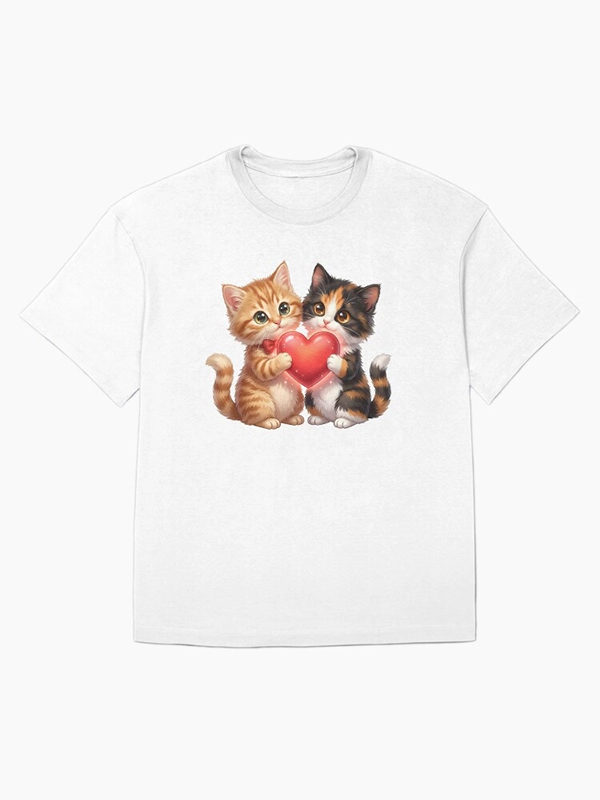
More products: https://www.redbubble.com/shop/ap/178882160?asc=u
Branding Influence on Terminology
Brands wield immense power in shaping how we refer to wardrobe staples. For many, the word “t-shirt” conjures images of global labels like Nike or Adidas, while boutique streetwear brands often market “tees” to evoke a more laid-back, insider vibe. This distinction isn’t accidental: by choosing precise terminology, companies can tap into consumer perceptions, positioning their garments as premium, urban, or eco-friendly.
When searchers type “t shirt or t-shirts” into Google, the results they encounter vary depending on brand-driven SEO strategies. Global giants invest heavily in bidding on both singular and plural keywords, ensuring visibility whether shoppers search for “graphic t shirt” or “vintage t-shirts.” Smaller labels, however, might focus on niche descriptors like “organic cotton tee” to attract a specific audience. Over time, these marketing choices influence mainstream vocabulary—shoppers begin using the brand’s preferred term, reinforcing the company’s positioning in the crowded fashion landscape. Ultimately, branding doesn’t just sell products; it dictates the very language we adopt when talking about what we wear.
Cultural Impact on Style Terms
Language reflects culture, and the terms for the classic cotton top vary greatly around the globe. In the United Kingdom, “vest” often refers to what Americans call an undershirt, while “tee” is widely used for the casual shirt worn on its own. In Spanish-speaking countries, “camiseta” is the go-to word, and in Japan, you might hear “Tīshatsu,” a loanword that’s been adapted into local speech. Such variations illustrate not only translation but also the way societies integrate global fashion into their own traditions.
Within subcultures, the t-shirt’s name can shift further. Skateboarders might favor “tee,” while vintage enthusiasts speak of “jerseys” or “crew shirts.” Online communities debate the finer points—should I tag my Instagram post #tshirt or #tshirts? This back-and-forth echoes the larger question of “t shirt or t-shirts,” proving that our style lexicon evolves with each cultural exchange. As brands and consumers navigate these diverse influences, a single garment continues to carry multiple identities and meanings around the world.
Personal Expression Through T-Shirts
Few clothing items rival the t-shirt’s ability to convey individual personality. A blank tee can be custom-printed with a personal photo, a favorite quote, or an inside joke shared among friends. Graphic designers, artists, and entrepreneurs have turned this simple shirt into a medium for storytelling, art, and social commentary. Whether you’re championing a cause, supporting an indie band, or showcasing your own artwork, the way you style and phrase it—the choice between “t shirt or t-shirts” in your online store’s menu—becomes part of the narrative.
Moreover, the t-shirt’s role in self-expression extends beyond visuals. The cut, color, and fit you choose speak volumes: oversized tees signal relaxed streetwear sensibilities; vintage band shirts nod to music fandom; fitted, minimal designs suggest a sleek, modern aesthetic. As shoppers share their outfits on social media, they often wrestle with hashtags—#graphictee, #basictee, #tshirtstyle—showing how terminology enhances personal branding. In turn, this lexicon informs future collections, as designers respond to the language their audience uses to describe their identity-wear.
Digital Era Language Shifts in Fashion
The digital revolution has accelerated changes in fashion terminology. Instant messaging, character limits, and search algorithms favor brevity, giving rise to shorthand like “tee.” Meanwhile, auto-correct and voice-search tools influence spelling and phrasing, sometimes lumping “t shirt or t-shirts” under a single suggestion. What once required careful typing now transforms through predictive text, chatbots, and virtual stylists.
Fast-moving platforms such as TikTok introduce slang that spreads globally within days. Viral challenges featuring custom tees lead to new descriptors—“fit check,” “OOTD,” or “drip.” When fashion bloggers write captions, they often experiment with hashtags to optimize reach: #mysummertee or #go-toTshirt, reflecting how digital language shapes real-world trends. As e-commerce sites adapt, they frequently A/B test listing titles to see whether “women’s tee” outperforms “women’s t-shirt.” These experiments underscore how, in the digital era, semantic nuances directly influence visibility, sales, and consumer perception.
Search Engine Optimization for T-Shirt Brands
For apparel retailers, mastering SEO means understanding not only product quality but also keyword variation. The choice between using “t shirt” or “t-shirts” in titles, meta descriptions, and blog posts can affect ranking positions. Keyword research often reveals distinct search volumes: while “custom t shirt” may attract hobby printers, “custom t-shirts” might draw bulk buyers. By analyzing search data, brands tailor their content to capture both intents.
Optimizing category pages requires strategic use of long-tail keywords like “organic cotton graphic tee” or “retro band t-shirts.” Pairing these with engaging product descriptions improves dwell time and reduces bounce rates. Structured data markup, including schema for products and reviews, further helps search engines understand layout—meaning your site is more likely to appear in rich results. Ultimately, asking “t shirt or t-shirts” in your keyword plan reflects a broader tactic: cover every variation customers might type, ensuring no potential sale slips through the cracks.
Social Media Trends and T-Shirt Vocabulary
Social platforms have become incubators for new fashion lexicons. Instagram hashtags such as #TeesOfInstagram or #TShirtsDaily showcase how users tag their favorite graphic shirts. Twitter discussions around sustainable fashion often mention “eco-tee” or “organic t-shirts,” demonstrating community-driven vocabulary shifts. On TikTok, trending sounds can redefine a garment in seconds—users might label their style as “vintage tee haul” or “custom t-shirt DIY,” highlighting how hashtags reshape search and discovery.
Engagement metrics reveal which terms resonate most: “tee” often garners quick scrolling thumbs, while the more formal “t-shirt” tends to align with editorial posts or brand announcements. Influencers strategically alternate between #Tshirt and #Tshirts to maximize visibility across feeds. When a brand seeks to launch a new drop, they coordinate hashtag storms, tagging both singular and plural forms to cast the widest net. By observing which phrases lead to saves, shares, and purchases, marketers refine their lexicon—bridging the gap between “t shirt or t-shirts” and real-world adoption.
Impact of Celebrity Endorsements on T-Shirt Terminology
Celebrity style has a profound impact on the language of fashion. When a high-profile star debuts a named tee—be it Beyoncé’s Ivy Park slogan shirt or Justin Bieber’s Drew House top—the garment often takes on the celebrity’s brand identity. Fans searching for “Beyoncé t-shirt” or “Drew tee” are influenced by press releases, social media mentions, and retail site headings. This direct association shapes how the public refers to their next wardrobe purchase.
Moreover, celebrity collaborations with designers can introduce hybrid terms. Kanye West’s Yeezy line popularized minimalist “Basic Tee,” while Rihanna’s Savage X Fenty swim-to-tee combos launched new descriptors like “swimshirt.” Each time a celebrity labels a product, that terminology ripples through search engines and style blogs. The ongoing debate of “t shirt or t-shirts” is further complicated when merch drops use unique stylings—like Travis Scott’s Cacti tees—cementing personalized vernacular in mainstream fashion consciousness.
The Future of Style Language: Forecasting Trends and Terminology
Looking ahead, emerging technologies like AI-driven design and virtual try-ons will shape the vocabulary of apparel. Voice-activated shopping assistants may prompt users to say “show me performance tee” rather than navigating through t-shirt menus. Augmented reality apps could assign mood-based tags—#chilltee or #powerTshirts—based on color theory and user preferences. Such innovations will blur the line between singular and plural searches, making the question of “t shirt or t-shirts” evolve into more dynamic queries.
Additionally, sustainability concerns will spawn new language: “circular tees,” “biofabricated t-shirts,” and “regenerative cotton shirts” may become industry standards. As global communities continue to blend linguistic traditions, we’ll likely see hybrid terms like “tee-shirt” or region-specific slang enter mainstream fashion dialogue. Ultimately, the future of style language hinges on our collective creativity, technological integration, and cultural exchange—ensuring that what we call this wardrobe essential remains as adaptable as the garment itself.
Conclusion
Decoding the nuances between “t shirt or t-shirts” reveals more than just spelling preferences—it uncovers the complex interplay of history, branding, culture, and technology in fashion terminology. From humble naval undershirt to global style icon, the t-shirt’s journey reflects our evolving relationship with language and self-expression.
As we move forward into a digital and sustainable future, the names we give this staple will continue to shift, influenced by SEO strategies, celebrity collaborations, and cultural trends. Embrace the variety of terms, for within them lies the rich story of fashion’s past, present, and future.
Discover more from Shop with t-shirts, variety of products
Subscribe to get the latest posts sent to your email.