A Complex Rubik’s Cube, Partially Dissolved Samsung Galaxy Phone Case
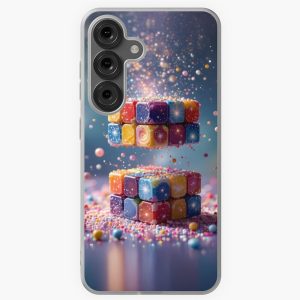
In the realm of contemporary technology and entertainment, two seemingly disparate items—the Rubik’s Cube and the Samsung Galaxy phone case—have emerged as cultural icons. Their convergence in a technological mishap presents a peculiar narrative that intertwines the complexity of modern design with the challenges of material durability. This article explores the intersection of the two, focusing on the intriguing case of a complex Rubik’s Cube and a partially dissolved Samsung Galaxy phone case.
The Rubik’s Cube, invented in 1974 by Hungarian architect Ernő Rubik, is renowned for its combinatorial complexity and intellectual challenge. The standard 3x3x3 cube, with its 43 quintillion possible combinations, is a testament to the intricate nature of mathematical puzzles. Over the decades, the cube has evolved, with newer versions incorporating additional rows and columns, increasing the complexity and appeal for enthusiasts and competitors alike. These advanced cubes require not only cognitive dexterity but also a keen understanding of spatial orientation and algorithmic thinking.
In parallel, the Samsung Galaxy phone case symbolizes the intersection of technology and lifestyle. As smartphones became ubiquitous, the need for protective, yet stylish accessories grew. Manufacturers have since strived to combine aesthetics with functionality, resulting in cases that are both visually appealing and capable of safeguarding devices from everyday wear and tear. However, the durability of these cases is often tested by unforeseen circumstances, such as exposure to harsh chemicals or extreme temperatures.
The convergence of these two objects arose from an incident that highlighted the vulnerability of modern materials. A Samsung Galaxy phone case, designed to withstand daily challenges, fell victim to an unexpected chemical spill. The incident resulted in the partial dissolution of the case, revealing the limitations of the materials used in its construction. This occurrence, though unfortunate, provides a valuable lesson in the ongoing quest for materials that can endure the myriad of challenges posed by daily life.
The complexity of the Rubik’s Cube serves as a metaphor for the intricacies involved in material science and product design.
Just as solving a cube requires a strategic approach and understanding of its internal mechanics, developing a phone case that balances aesthetics, functionality, and durability demands a nuanced understanding of material properties and consumer needs. The partially dissolved phone case underscores the importance of ongoing research and innovation in materials engineering.
This incident also serves as a reminder of the need for continuous improvement in product design and testing. As consumer electronics become increasingly advanced, the accessories that accompany them must also evolve to meet new demands. The partially dissolved Samsung Galaxy phone case is not merely a failure but an opportunity to drive advancements in material science, ensuring that future products can withstand the rigors of everyday use.
In conclusion, the interaction between a complex Rubik’s Cube and a partially dissolved Samsung Galaxy phone case illustrates the dynamic interplay between intellectual challenge and material durability. As technology continues to advance, so too must our approach to product design and material selection, ensuring that the items we rely on daily are not only functional but resilient in the face of unforeseen challenges.
More products: https://www.redbubble.com/shop/ap/176709955?asc=u