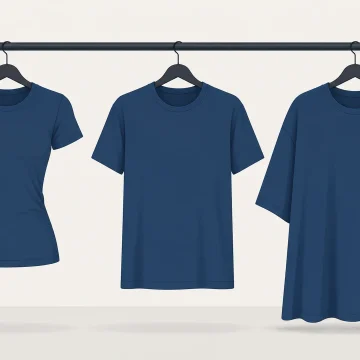
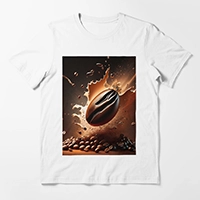
If you’ve ever seen the phrase “print on demand” while shopping for a custom t-shirt and wondered what it actually means for your order, you’re not alone. Most content about print on demand talks to people trying to start a side business. This guide talks to you, the buyer. It explains what happens between clicking “order” and a shirt landing on your doorstep, so you know what to expect from quality, timing, and fit.
What Is Print on Demand, Really? (A Buyer’s Perspective)
Print on demand means your shirt doesn’t exist until you order it. Instead of picking from a warehouse full of pre-printed stock, a printer produces your exact design on a blank shirt after you place the order. Production happens per order, not in bulk ahead of time.
For you, this has a few practical effects. You can usually get a design personalized with your own text, photo, or logo. You’re not limited to whatever sizes or colors happen to be sitting on a shelf. The tradeoff: your shirt takes a bit longer to arrive than something already sitting in a warehouse, because it has to be printed first.
How Print on Demand Works Behind the Scenes
The flow behind print on demand is fairly consistent across providers. You choose a blank shirt, submit or personalize a design, and place your order. The provider then prints your design using a method suited to that design and shirt, runs some quality checks, and ships it directly to you.
Each step affects your final shirt. The blank shirt’s fabric affects how ink sits on it. The printing method affects how sharp and durable the design looks. The shipping step affects how soon you’ll actually wear it.
DTG Printing vs Screen Printing vs Vinyl: Which Method Fits Your Order
The printing method behind your custom t-shirt matters more than most buyers realize. You’ll most often run into three methods: direct-to-garment (DTG) printing, screen printing, and heat transfer vinyl. Each handles detail, durability, and cost differently.
DTG printing works like a specialized inkjet printer for fabric. It sprays ink directly onto the shirt, so it can reproduce photos, gradients, and many colors without much added cost. Screen printing pushes ink through a stencil-like screen, one screen per color. That makes it efficient for simple designs but pricier as colors increase. Heat transfer vinyl cuts a design from colored vinyl sheets and presses it onto the shirt with heat. It works well for bold text and simple shapes.
When DTG Makes Sense
DTG printing is generally the better fit if you want a single shirt or a small order with a detailed design. There’s no setup cost per color, so printing a full-color photo isn’t much more expensive than printing a simple logo. This is one reason DTG has become closely associated with print on demand for one-off custom orders.
Print a photo-heavy design with gradients using DTG, and it’ll hold detail a screen print simply can’t reproduce. A two-color logo on a team order, on the other hand, is often cheaper and more durable when screen printed.
When Screen Print or Heat Transfer Vinyl Wins
Screen printing tends to win on larger orders with simple, limited-color designs, because the per-shirt cost drops as quantity rises. It also tends to lay down a thicker, more opaque layer of ink, which can hold up well over many washes.
Heat transfer vinyl suits small orders needing bold text, numbers, or a single-color logo, especially on darker fabrics where DTG ink might need more coverage. It’s common for things like personalized names or jersey numbers.
If you’re ordering just one or two shirts rather than a bulk batch, it’s worth looking at options for ordering custom t-shirts with no minimum quantity so the printing method and pricing make sense for a small run.
How to Judge Print on Demand Quality Before You Order
Print on demand quality depends on more than just the artwork you upload. Two shirts printed with the same file can look completely different depending on the fabric, the ink cure, and how carefully the printer checked the file beforehand.
Before ordering, look at the fabric weight and blend listed on the product page. A heavier cotton or cotton-blend shirt generally holds print better and feels less like paper than a very light, cheap tee. If a provider shows sample photos of the actual printed product rather than only a mockup, that’s a good sign they stand behind their work.
At shopwithtshirts.com, every custom order goes through a print-method check before production so buyers get the finish that actually matches their design. That proofing step catches mismatches between file resolution, design complexity, and the chosen print method before ink ever touches fabric.
It also helps to check the return or reprint policy. A provider confident in their print quality usually offers some kind of guarantee if a shirt arrives with a flawed print.
Signs of a Durable, Well-Cured Print
A well-cured print should feel bonded to the fabric, not sitting on top of it like a sticker. Ink that’s cracked, peeling, or flaking straight out of the package is a warning sign, not something that will improve with wear.
A shirt that fades or cracks after a handful of washes usually points to a low-cure heat transfer or vinyl print rather than a properly cured DTG or screen print. If a provider publishes wash-care guidance, like washing inside-out on cold, that’s usually a sign they’ve tested the print’s durability rather than guessing.
It’s also worth understanding the shirt itself, separate from the print. Reviewing how to judge t-shirt fabric quality can help you spot a blank that will hold up, whichever printing method ends up on it.
Print on Demand Turnaround Time and Shipping: What to Expect
Print on demand turnaround time covers two separate stretches: production and shipping. Production is the time it takes to actually print your shirt after you order it. Shipping is the time it takes to get from the printer to your door.
Most reputable custom t-shirt providers quote turnaround in a range rather than a single fixed number, commonly a few business days for standard orders and longer for bulk or rush holiday periods. That range exists because production time can shift with order volume, design complexity, and how many colors or print locations you’ve chosen.
If you’re ordering ahead of an event or holiday, build in extra buffer time. Providers often see order volume spike around major holidays, which can push production queues out further than usual. If a provider offers a rush option, ask specifically what it speeds up: production, shipping, or both. Rushing one without the other won’t get your shirt to you any faster.
Choosing Your Design and Customization Options
The design you upload directly shapes what the finished shirt looks like, so it’s worth spending a little time on file quality before you submit it. A low-resolution image that looks fine on a phone screen can look blurry or pixelated once it’s printed several inches wide on fabric.
Placement matters too. A design meant for the center chest won’t automatically look right if you move it to a sleeve or the back, especially with photo-based designs that have busy backgrounds. If you’re customizing a photo, make sure it’s a high-resolution file, not a screenshot or a copy pulled from social media.
Personalizing Text, Photos, and Logos
Text and simple logos are generally the most forgiving to personalize. They scale cleanly and work across DTG, screen print, or vinyl. Photos are pickier: they need higher resolution and generally do best with DTG printing because of the color range and detail it can reproduce.
If you’re customizing a logo for a team or group order, keep the color count in mind since it directly affects screen printing cost. For inspiration on what works well as a printed design, it can help to browse current graphic t-shirt trends or, for a more personal option, personalized funny t-shirt ideas before finalizing your own artwork.
Experienced custom printers generally advise asking about fabric composition and pretreatment before ordering, since print quality depends as much on the shirt underneath as the ink on top. This is also a good moment to check how a particular blank shirt brand performs with your chosen print method. Comparing the best t-shirt brands can help you pick a base that will hold the design well.
Questions to Ask Before You Order Custom Printed Shirts
Before placing a custom order, it helps to run through a short checklist with the provider. A few direct questions can save you from a disappointing shirt later.
- Which printing method will they use for your specific design, and why?
- What fabric and blend is the blank shirt made from?
- Do they show a proof or sample before printing, and can you approve it?
- What’s their typical turnaround time, including shipping, not just production?
- What happens if the print is damaged, mismatched, or wrong on arrival?
Do print-on-demand shirts fit and feel the same as regular retail t-shirts? Generally, yes. The blank shirt is often the same retail-quality garment you’d find on a store shelf. The difference lies entirely in what’s printed on it and how well that printing was done.
If you’re ready to order a custom shirt with a printing method matched to your design, explore the custom t-shirt printing options at shopwithtshirts.com and get a quote before you commit to a design.